
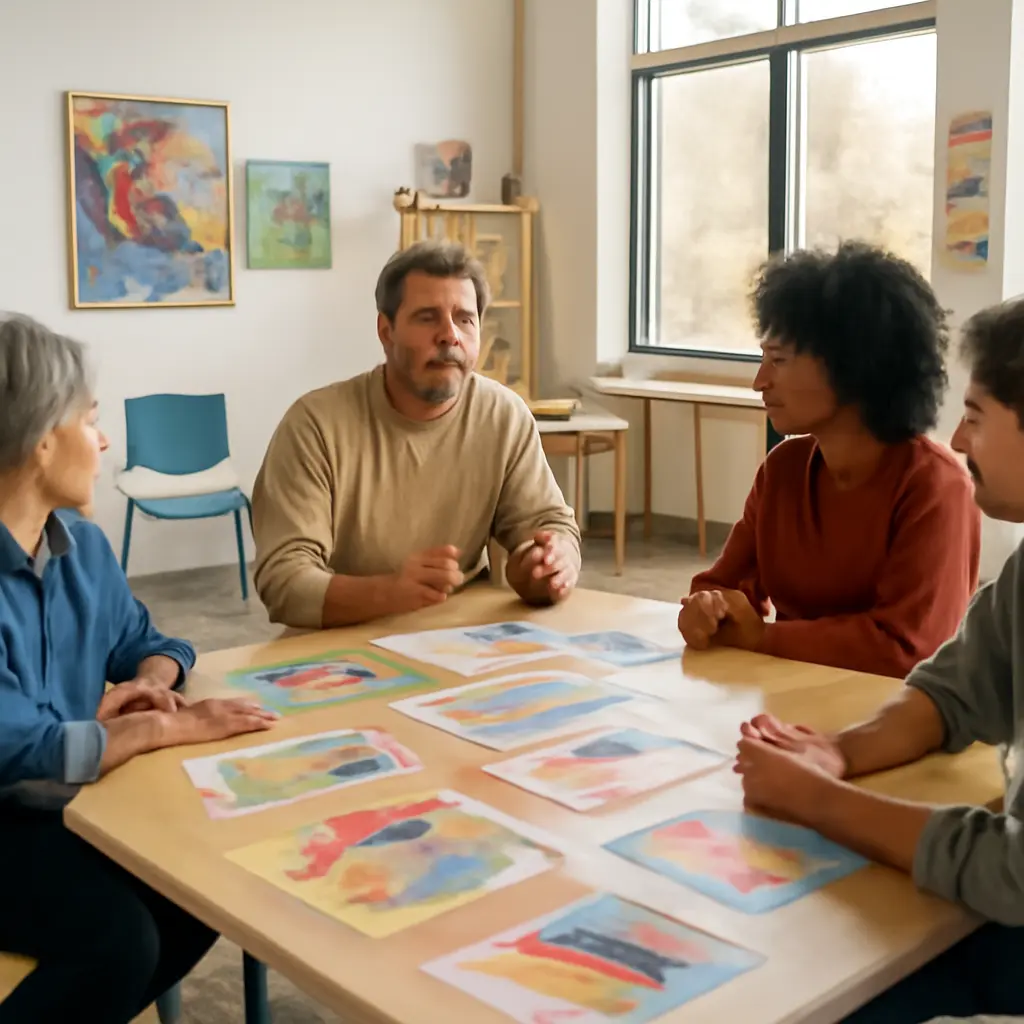
Arts impact measurement goes beyond numbers and surveys
Arts impact measurement is the practice of understanding what changes when people, communities, and institutions engage with the arts. It goes beyond attendance figures and satisfaction surveys by combining quantitative evidence with stories, observation, community knowledge, and analysis of longer-term change. This broader approach matters because arts participation is associated with social connection and well-being, yet no single metric can explain how or why those effects occur. Research from the World Health Organization’s 2019 review of more than 3,000 studies found evidence that the arts can support health promotion, prevention, and treatment; measuring that contribution well requires methods suited to different outcomes and contexts.
Arts impact measurement combines quantitative and qualitative evidence
Arts impact measurement is a structured process for assessing the changes, contributions, and experiences associated with artistic activity. The Arts Council England’s evaluation guidance distinguishes between outputs—such as events delivered or people reached—and outcomes, meaning changes experienced by participants, organizations, or communities. Impact refers to the wider or longer-term effects to which an activity contributes. These terms are related, but they are not interchangeable.
A strong measurement plan therefore asks more than “How many people attended?” It asks who participated, what they experienced, what changed, for whom, and under what conditions. Attendance counts and surveys remain useful, but they are only parts of the evidence. Qualitative interviews, participant-created work, observation, case studies, and community-led interpretation can reveal meaning that a numerical score alone cannot capture.
Outputs, outcomes, and impact
Outputs are the immediate products of a program: workshops held, performances presented, or participants reached. Outcomes describe nearer-term changes, such as increased confidence, new skills, or stronger relationships. Impact concerns broader effects, including sustained cultural participation, changes in community belonging, or contributions to health and civic life. The distinction helps organizations avoid presenting activity counts as proof of lasting change.
For example, a youth theatre project might report the number of sessions and young people attending as outputs; participants’ reported communication skills as an outcome; and evidence of continued engagement or stronger connections with local institutions as possible longer-term effects. Attribution is difficult: changes may also reflect family, school, or wider social conditions. Evaluators should describe the arts program’s contribution carefully rather than claim it caused every observed result.
Quantitative and qualitative methods
Quantitative methods use counts, rates, scales, or comparisons to identify patterns. They can show who took part, how often, and whether responses changed over time. Qualitative methods—including interviews, focus groups, observation, and analysis of creative work—help explain participants’ experiences and the context behind those patterns. Mixed-method evaluation uses both, enabling a project to test the reach of an outcome while also exploring what it means to participants.
The National Endowment for the Arts’ Social Impact of the Arts Project at the University of Pennsylvania has examined how cultural participation relates to neighborhood conditions and social outcomes. Such research illustrates why measurement may need to combine individual-level evidence with community-level context. A survey can indicate reported belonging; interviews and local data can help explain how the arts activity, the place, and existing relationships interact.
Arts impact measurement captures cultural, social, and health value
The value of arts activity is multidimensional. UNESCO’s 2005 Convention on the Protection and Promotion of the Diversity of Cultural Expressions recognizes the importance of cultural expression and participation, while the World Health Organization’s 2019 scoping review documents a substantial body of research on arts and health. These sources support a broad view of value, but they do not suggest that every arts project produces the same outcomes. Measurement must reflect the project’s purpose, participants, and setting.
Cultural participation and belonging
Cultural impact includes opportunities to create, encounter, and share artistic work, as well as the recognition of diverse identities and traditions. Relevant evidence may include whether participation reflects the local population, whether barriers to access have changed, and whether participants feel that their perspectives are represented. These measures should be interpreted with care: demographic reach alone does not establish that an experience was welcoming or culturally meaningful.
Community arts programs can document this dimension through participant stories, audience feedback, artist reflections, and analysis of who helps shape programming. A neighborhood mural project, for instance, might record not only the number of collaborators but also how residents influenced the design and whether they recognize their histories in the finished work.
Social connection and community change
Social impact concerns relationships, trust, inclusion, and collective capacity. Possible indicators include participants’ sense of connection, opportunities for intergenerational exchange, or partnerships formed between cultural organizations and community groups. These outcomes are often relational and gradual, so repeated observation and follow-up may be more informative than a single end-of-event questionnaire.
The Social Impact of the Arts Project has investigated links between cultural resources and social well-being in communities. Its work points to the importance of place-based analysis: local institutions, demographic conditions, and existing networks influence how cultural activity is experienced. A useful evaluation therefore combines participant-level feedback with context, rather than assuming that the same program will have identical effects everywhere.
Health and well-being
Arts-and-health evaluation examines how activities may relate to physical health, mental well-being, prevention, or care. In its 2019 scoping review, the World Health Organization synthesized evidence from more than 3,000 studies across arts engagement and health. The review describes potential roles for arts in health promotion and treatment, while the diversity of studies also underscores the need to match claims to the quality and design of the evidence.
A hospital music program might track participation and reported mood, while also gathering staff observations and participant accounts. If a project seeks to demonstrate clinical effects, it may require appropriate comparison groups, validated measures, and ethical oversight. For many community programs, the more suitable goal is to understand participant experience and contribution without overstating medical causation.
Arts impact measurement improves through ethical, participatory practice
Measurement is not neutral: choices about what counts, who provides evidence, and who interprets it shape the conclusions. Participatory evaluation involves artists, participants, and communities in deciding what questions matter and how findings should be understood. This approach can improve relevance and trust, particularly when standard indicators overlook local knowledge or lived experience.
Community-defined indicators
Community-defined indicators are measures selected with the people whose experiences are being assessed. Instead of assuming that success means higher attendance or improved confidence scores, evaluators might ask participants to define meaningful change—for example, feeling safe to express a cultural identity or gaining a lasting role in local decision-making. This process makes evaluation more responsive, though it still requires clear documentation of how evidence is collected and interpreted.
The “social prescribing” movement offers a practical example of arts organizations working alongside health and community services. In the United Kingdom, the National Academy for Social Prescribing describes creative activities as one possible community resource for supporting well-being. Evaluations of such programs can combine referral and participation data with accounts from participants and practitioners, while distinguishing reported experience from proven clinical outcomes.
Ethics, accessibility, and data stewardship
Ethical evaluation protects consent, privacy, dignity, and the right to decline participation. It should make data collection accessible, avoid extracting personal stories without clear purpose, and explain how findings may be used. When projects work with children, people receiving care, or communities facing discrimination, safeguards and accessible communication are especially important.
Evaluators should also examine whose experiences are missing. A digital survey may exclude people without reliable internet access; a long written questionnaire may create barriers for participants with literacy or language needs. Offering interviews, translated materials, accessible formats, or creative response options can broaden participation and make findings more representative.
Learning, adaptation, and accountability
Evaluation is most useful when findings inform decisions rather than simply satisfy reporting requirements. A practical cycle sets a small number of clear questions, gathers proportionate evidence, discusses results with participants and staff, and adjusts the program. Reporting should include limitations as well as successes, especially where sample sizes are small, follow-up is limited, or causal claims cannot be supported.
A concise results framework can pair each intended outcome with an indicator, evidence source, and review point. For instance, an organization seeking stronger social connection might use a short participant scale, follow-up interviews, and facilitator observations at the start and end of a program. A chart can show participation and survey responses over time, while case studies explain the experiences behind the trend. Neither form of evidence should be treated as a substitute for the other.
Conclusion: measure arts impact with evidence and lived experience
Arts impact measurement is strongest when it distinguishes outputs, outcomes, and longer-term impact; combines quantitative and qualitative methods; and recognizes cultural, social, and health dimensions without assuming identical results across settings. Research reviewed by the World Health Organization and community-focused work by the Social Impact of the Arts Project show why evidence must be interpreted in context. Participatory, ethical evaluation can make that evidence more meaningful and useful.
Arts organizations, funders, and public agencies can take a practical next step: define the change they hope to support with participants, choose a few proportionate indicators, and share what the evidence can—and cannot—show. Further reading from the Arts Council England, the World Health Organization, and the National Endowment for the Arts can help teams develop evaluation plans that balance accountability with learning.
Sources: World Health Organization, What is the evidence on the role of the arts in improving health and well-being? A scoping review, 2019, https://www.who.int/europe/publications/i/item/9789289054553; Arts Council England, Evaluation, https://www.artscouncil.org.uk/our-open-funds/our-funding-programmes/evaluation; University of Pennsylvania, Social Impact of the Arts Project, https://www.arts.upenn.edu/sia/; UNESCO, Convention on the Protection and Promotion of the Diversity of Cultural Expressions, 2005, https://en.unesco.org/creativity/convention; National Academy for Social Prescribing, Arts, culture and creativity, https://socialprescribingacademy.org.uk/what-is-social-prescribing/arts-culture-and-creativity/