
How to Volunteer at Local Arts Organizations and Events
Local arts organizations and events rely on volunteers to welcome audiences, support artists, and make cultural experiences possible. Volunteering means giving time and skills without pay to help a nonprofit, cultural institution, or community event advance its work. A practical way to get involved is to choose an organization, review its volunteer opportunities, apply or contact its coordinator, and complete any required orientation. Roles range from ushering and festival support to gallery assistance, administration, and specialized skills. The National Council of Nonprofits describes volunteers as an important source of capacity for nonprofit organizations, while the U.S. Bureau of Labor Statistics reported that 28.3% of people in the United States volunteered through or for an organization during 2023. That participation rate shows how volunteering can connect individual interests with community needs.
How to Find Local Arts Volunteer Opportunities
Finding a suitable opportunity starts with identifying the kind of arts experience you want and the time you can commit. Local arts volunteering includes recurring roles at museums, theaters, libraries, and arts nonprofits, as well as short-term assignments at festivals, performances, and public art projects. Check organizations’ official websites, community arts calendars, municipal cultural-affairs offices, volunteer centers, and event announcements. If a listing is not available, contact the organization directly and ask whether it accepts volunteers.
Choose an organization that fits your interests
Start with the art form, audience, or neighborhood you care about. Search for museums and galleries if you enjoy visual arts; theaters, orchestras, and dance companies if you prefer live performance; and arts festivals or community studios if you like hands-on public events. Local public libraries and community centers may also host exhibitions, workshops, or performances. Read each organization’s mission and recent programs to understand who it serves and what volunteer support it needs.
Use reliable channels to search
Look first at the organization’s own volunteer or “get involved” page, since it is the most direct source for current openings and application procedures. Event organizers may recruit through local arts councils, city or county cultural programs, university arts departments, nonprofit volunteer centers, and community newsletters. You can also ask staff at an event whether volunteers are recruited directly or through a partner organization. Confirm dates, duties, accessibility arrangements, and whether the role is paid or unpaid before applying.
Arts Volunteer Roles and Responsibilities
An arts volunteer role is an agreed set of unpaid tasks that supports an organization’s cultural, educational, or public-facing work. The National Council of Nonprofits emphasizes that volunteer engagement should be organized around an organization’s mission and supported with appropriate management. In practice, assignments vary by venue and event: some are public-facing, while others involve preparation, operations, or specialist skills. Ask for a role description so you know what is expected and whom to contact during a shift.
Audience services and front-of-house support
Front-of-house volunteers help visitors navigate a venue or event. Tasks can include greeting guests, checking tickets, directing people to seats, answering basic questions, handing out programs, and helping maintain orderly entry and exit. These roles suit people who enjoy interacting with the public and can follow venue procedures. Organizations should explain how to handle accessibility requests, late arrivals, lost property, and situations that need staff intervention.
Gallery, museum, and educational assistance
Gallery and museum volunteers may welcome visitors, support family activities, prepare learning materials, or assist with public programs. Some institutions offer docent or gallery-guide roles, which involve learning about collections and helping visitors interpret them. These positions may require training and a regular time commitment. Volunteers should not assume they can handle or move artworks; collection care and security procedures are set by the institution and must be followed.
Festival and performance operations
Short-term event volunteers support the practical work behind festivals and performances. Common tasks include welcoming attendees, staffing information points, distributing materials, assisting with queues, and helping event teams communicate. Some roles involve setup or cleanup, so ask about physical demands, shift length, weather exposure, and safety instructions. The event organizer should identify a supervisor and explain what to do if a problem arises.
Administration, communications, and specialist skills
Arts organizations may also need help with office tasks, translation, photography, design, fundraising events, social media, research, or technical production. These opportunities can suit volunteers whose strengths are less public-facing. Clarify how the organization will use your work, who approves it, and whether there are confidentiality, copyright, or equipment rules. Offer only skills you can reasonably provide and agree on a defined scope and timeline.
How to Apply and Prepare for an Arts Volunteer Role
Applying for an arts volunteer position is usually a straightforward process, but requirements differ. A typical route includes submitting an application, discussing availability and interests, completing screening if required, and attending an orientation. The Corporation for National and Community Service’s research on volunteering has documented the importance of organizational support and positive volunteer experiences; clear expectations help both volunteers and organizations make the partnership productive.
Make a focused inquiry or application
Introduce yourself briefly, explain why the organization’s work interests you, and state when you are available. Mention relevant experience—such as customer service, teaching, event setup, languages, or technical skills—without overstating it. If you are contacting an organization without a posted opening, ask whether it has current or upcoming volunteer needs and what the application process involves.
Confirm screening, training, and accessibility needs
Some organizations require references, background checks, age minimums, or safeguarding procedures, particularly when volunteers work with children or vulnerable people. Others require training in visitor services, emergency procedures, or collection care. Ask whether training is provided, whether there are costs, and what accommodations are available. The U.S. Department of Justice’s guidance on effective communication under the Americans with Disabilities Act is relevant to public-facing programs: organizations should be prepared to communicate accessibly and explain available accommodations.
Agree on schedule and expectations
Before accepting a role, confirm the shift dates, arrival time, expected commitment, dress code, break arrangements, supervisor, and cancellation process. For recurring roles, ask how far ahead schedules are set and what notice is expected if you cannot attend. For one-day events, check whether transport, meals, or parking are provided rather than assuming they are included. A realistic commitment is more valuable than accepting shifts you cannot reliably cover.
Volunteer Responsibly and Build a Lasting Connection
Responsible volunteering means supporting the organization’s goals while respecting its staff, artists, visitors, and policies. Volunteers should follow instructions, protect private information, represent the organization accurately, and refer questions beyond their role to a staff member. The Points of Light organization’s civic-engagement resources emphasize that volunteering can strengthen community participation; in the arts, dependable support can help organizations deliver programs and welcome broader audiences.
Respect artists, audiences, and organizational policies
Follow rules on photography, recording, backstage access, artwork handling, and social media. Do not share private information about visitors, artists, staff, or security procedures. If you encounter a safety concern, accessibility issue, or conflict, notify the designated staff member instead of trying to resolve a situation beyond your training. A welcoming volunteer also avoids making assumptions about visitors’ identities, abilities, or knowledge of the arts.
Make the experience sustainable
After a shift or event, ask for feedback and share practical observations with the coordinator. If the role is a good fit, discuss future dates or additional responsibilities; if it is not, give notice and explain what schedule or task would work better. Organizations benefit from clear communication, and volunteers are more likely to remain engaged when duties, support, and time commitments are manageable.
Real-world example: a community arts festival
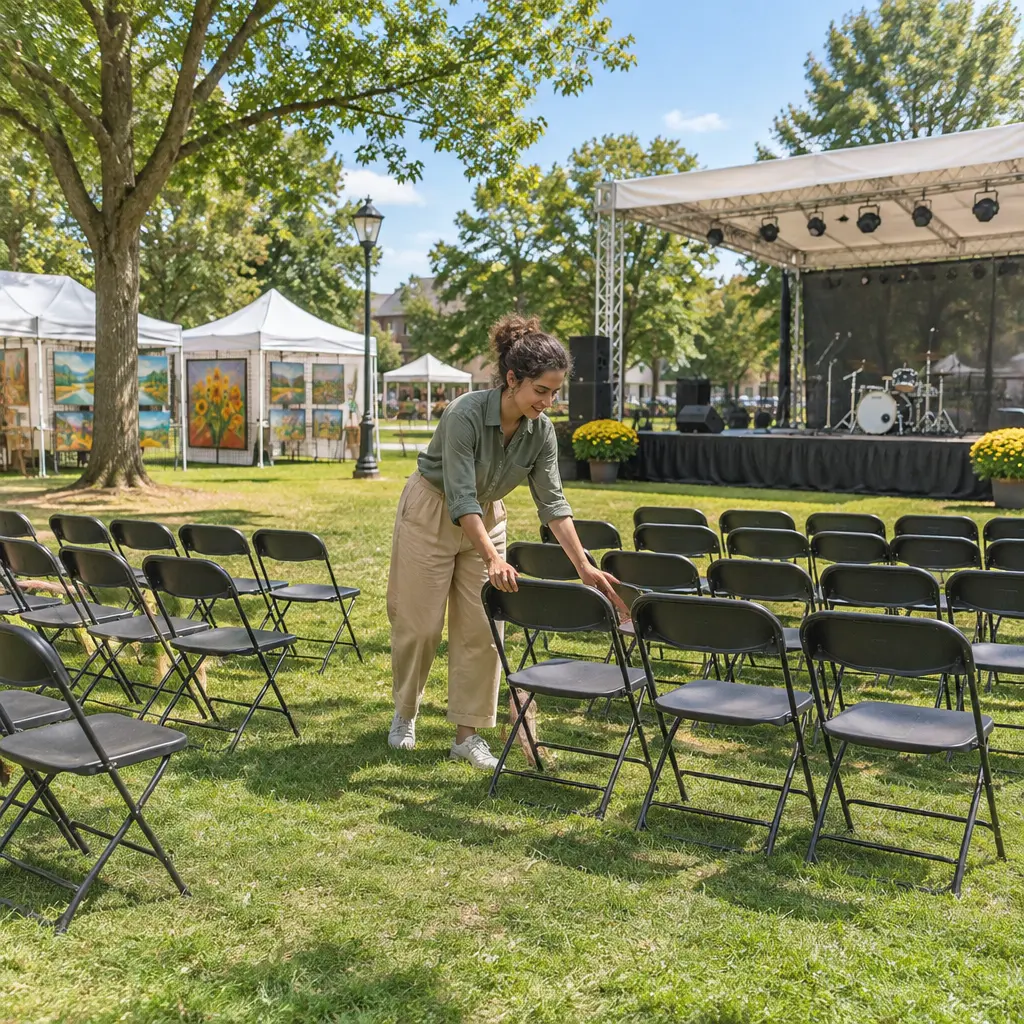
Consider a neighborhood festival that stages performances in a park and exhibits work by local artists. Its coordinator might recruit volunteers for guest welcome, information tables, artist check-in, and post-event cleanup. A prospective volunteer can select a shift, disclose relevant experience, attend a safety briefing, and receive a named contact for the day. This example illustrates why role descriptions and orientation matter: the volunteer knows what to do, artists receive practical support, and visitors can find assistance without interrupting the performance team.
Conclusion: Take the First Step Toward Arts Volunteering
Local arts volunteering ranges from ushering and gallery support to festival operations and specialist skills. To get started, choose an organization aligned with your interests, search its official channels, ask about current needs, and confirm training, accessibility, schedule, and responsibilities before committing. The U.S. Bureau of Labor Statistics’ 2023 volunteering figure—28.3% of people volunteering through or for an organization—underscores that organized volunteering is a significant form of civic participation. Contact a local arts organization or event coordinator this week, and begin with one clearly defined shift or assignment.
Sources: U.S. Bureau of Labor Statistics, Volunteering in the United States, 2023, https://www.bls.gov/news.release/volun.nr0.htm; National Council of Nonprofits, Volunteer Management, https://www.councilofnonprofits.org/running-nonprofit/administration-and-financial-management/volunteer-management; Corporation for National and Community Service, Volunteering and Civic Life in America, https://americorps.gov/about/what-we-do/research-and-reports/volunteering-civic-life-america; U.S. Department of Justice, ADA Requirements: Effective Communication, https://www.ada.gov/resources/effective-communication/; Points of Light, Civic Life Today, https://www.pointsoflight.org/civic-life-today/.