
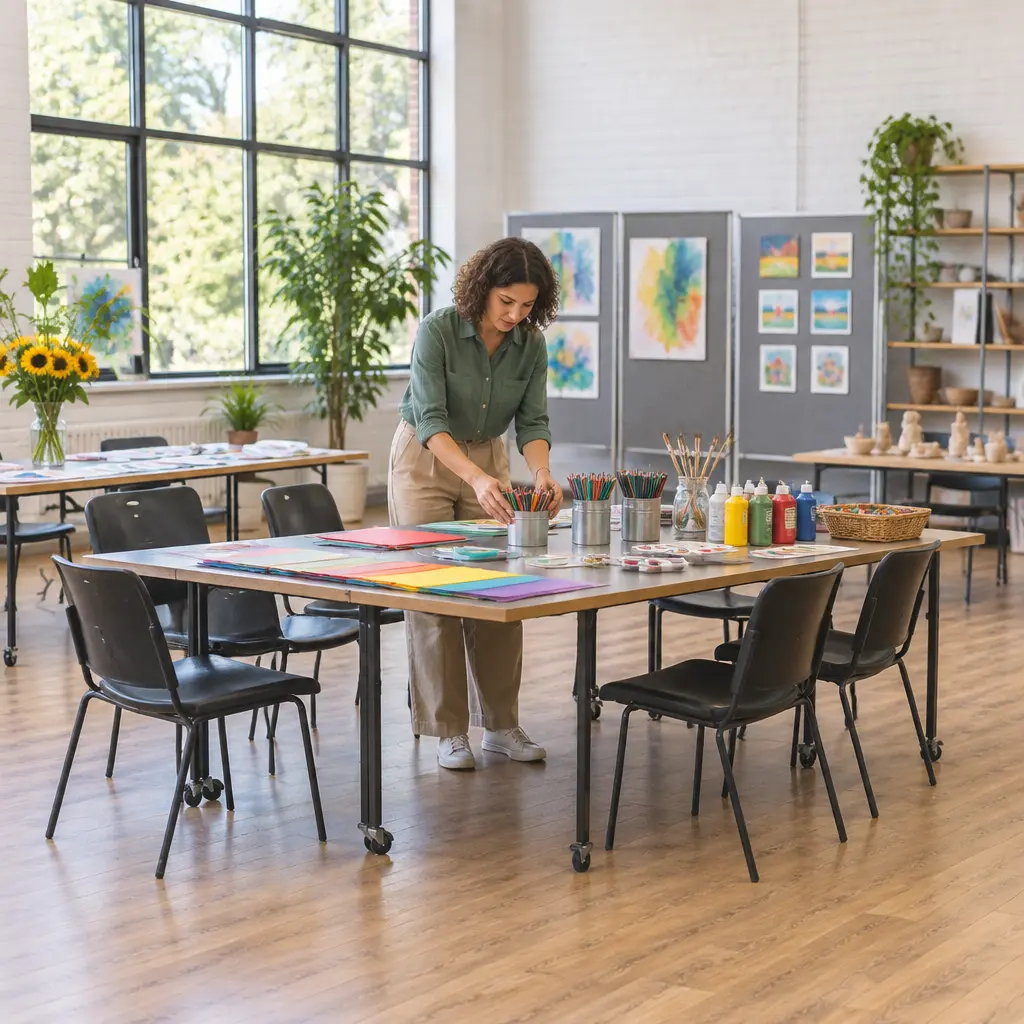
How to Plan and Host a Community Arts Event
A community arts event is a public gathering where local people share, experience, or make art together. Planning one well means setting a clear purpose, involving the community, choosing an accessible venue, budgeting realistically, coordinating artists and operations, and evaluating what happened. These steps matter because arts participation is associated with social connection and well-being: the World Health Organization’s review of more than 3,000 studies found evidence that the arts can support health and well-being across the lifespan. A thoughtful event can turn that potential into a welcoming, practical experience for a neighborhood.
Planning a Community Arts Event: Purpose, People, and Scope
Planning is the process of translating an artistic idea into a safe, accessible, and achievable public experience. The National Endowment for the Arts (NEA) describes arts participation broadly, including both attending arts activities and creating or sharing art. For an event organizer, that distinction is useful: a program can invite people to watch, participate, or do both.
Community arts events include festivals, exhibitions, performances, participatory workshops, public art activities, and culturally specific celebrations. Their formats differ, but effective plans connect artistic goals with local needs, resources, and practical constraints.
Set a purpose and define success
A purpose statement explains why the event should happen and whom it is meant to serve. “Celebrate local artists and make art-making accessible to families” is more actionable than “put on an art event,” because it helps determine the program, location, schedule, and evaluation measures.
Choose a small set of indicators before planning begins. Possible measures include attendance, number of local artists paid, participant feedback, accessibility features provided, and the share of visitors who live nearby. The NEA’s Survey of Public Participation in the Arts offers a useful reminder that participation includes different art forms and ways of engaging; organizers should therefore measure more than ticket sales alone.
Listen to the community and build partnerships
Community consultation is a structured way to learn what residents value, what could prevent them from attending, and which local partners can help. Ask potential audiences, artists, neighborhood organizations, schools, libraries, and cultural groups about preferred formats, timing, languages, transport, and cost. Short conversations or a simple survey can reveal practical barriers before they become expensive problems.
Treat artists and community partners as collaborators rather than last-minute suppliers. Agree on responsibilities, payment, credit, decision-making, and how photographs or recordings may be used. A bridge from consultation to programming is essential: feedback should visibly influence at least some event decisions, or participants may feel their time was not respected.
Designing a Community Arts Event: Program, Venue, and Access
Program and venue design determine what attendees experience and whether they can participate comfortably. A well-designed event aligns activities with its purpose, provides clear information, and considers access from the first invitation through arrival, participation, and departure.
Choose a suitable format and schedule
The event format is the structure through which people encounter the art. A festival can combine performances, demonstrations, and stalls; an exhibition can focus attention on visual work; and a workshop can make creative participation central. For a first-time event, a clear, manageable program is usually safer than a crowded schedule with more activities than the team can support.
Build a timetable that includes setup, sound checks, artist arrival, audience entry, transitions, breaks, and cleanup—not just public activities. Confirm performance lengths and changeover needs with artists. If the event is outdoors, establish a weather decision point and communicate the backup plan to participants and vendors.
Select a venue and plan accessibility
A venue is not simply a container for the program; it shapes who can attend and how they experience it. Assess capacity, cost, transport links, toilets, power, lighting, acoustics, step-free routes, seating, weather protection, and any permits or insurance requirements. Visit the site at the same time of day as the planned event when possible to check noise, shade, lighting, and access conditions.
Accessibility means anticipating different physical, sensory, communication, and financial needs. The U.S. Access Board’s guidance on the Americans with Disabilities Act provides standards for accessible facilities, while event organizers should also consider practical accommodations such as reserved seating, captions or interpretation where appropriate, plain-language directions, quiet space, accessible toilets, and clear advance information. Ask intended participants what accommodations would be useful rather than assuming one solution works for everyone.
Create a welcoming, culturally responsive experience
A welcoming event makes expectations understandable and reduces the social and logistical friction of joining in. Use clear signs, visible greeters, straightforward registration, and a program that explains whether activities are free, drop-in, or require advance booking. Where relevant, provide information in languages used locally and work with trusted community organizations to share it.
Cultural responsiveness involves respecting the communities whose stories, practices, and artworks are represented. Consult relevant artists and cultural knowledge holders about context, permissions, attribution, and appropriate presentation. This is especially important when an event includes traditions or materials that should not be treated as generic decoration.
Operating a Community Arts Event: Budget, Safety, and Promotion
Once the experience is designed, operations turn the plan into coordinated work. Budgets, staffing, risk management, communications, and contingency planning should be developed together because a change in one area—such as venue capacity—can affect the others.
Build a realistic budget and fair payment plan
An event budget is a forecast of income and expenses that helps organizers decide what is feasible. List artist fees, venue hire, permits, insurance, equipment, transport, accessibility services, marketing, materials, refreshments, security, cleanup, and contingency funds. Identify which costs are fixed and which vary with attendance.
Potential income may include grants, sponsorship, donations, ticket sales, vendor fees, or in-kind support. Record the conditions attached to each funding source and avoid relying on unconfirmed income for essential costs. Pay artists transparently where funds allow, confirm payment terms in writing, and do not treat “exposure” as a substitute for compensation. A simple budget table can show forecast and actual amounts side by side.
Assign roles and manage safety
An event team needs named owners for program coordination, artist liaison, venue operations, volunteer support, communications, and safety. Smaller events may combine roles, but every task should have one person responsible and a backup contact. Provide volunteers with a briefing, emergency contacts, a site map, and clear instructions on when to escalate a problem.
Risk management is the process of identifying hazards and reducing the likelihood or impact of harm. Walk through the site to identify crowding, trip hazards, electrical risks, heat or cold exposure, food-allergy concerns, and emergency access routes. Follow local fire, public assembly, food safety, safeguarding, and licensing rules; requirements vary by location and event type. Keep an incident log and make sure the team knows how to contact emergency services.
Promote the event and make attendance information useful
Promotion is most effective when it reaches the intended audience through channels they already use. Combine community partners, local noticeboards, newsletters, social media, libraries, schools, and local media rather than relying on one platform. Give partners a concise description, approved images, and ready-to-share details.
Every announcement should state the event’s date, times, location, cost, booking method, age guidance if relevant, transport or parking information, access provisions, and weather plan. Track practical measures such as registrations, referral sources, and questions received. These figures help improve outreach, but they should be interpreted alongside attendance and participant feedback rather than treated as a complete measure of impact.
Evaluating a Community Arts Event: Learning and Lasting Impact
Evaluation is the process of checking whether an event met its objectives and what organizers should change next time. It connects the event’s purpose to evidence, making it easier to explain results to artists, partners, funders, and residents.
Collect proportionate feedback and participation data
Use a small number of methods that match the event’s scale: attendance counts, a short optional survey, brief conversations, artist debriefs, and partner feedback. Ask questions tied to the original goals, such as whether visitors felt welcome, discovered a local artist, or had an opportunity to participate. Explain how responses will be used and avoid collecting personal information that is not needed.
The NEA’s arts-participation research distinguishes among forms of engagement, a useful model for evaluation. Record both reach—such as attendance—and quality indicators, such as accessibility, participant experience, and artist satisfaction. If the event has a specific equity goal, gather relevant information only with care, consent, and appropriate privacy protections.
Use findings to strengthen future events
A post-event review turns observations into decisions. Compare actual costs with the budget, note which communications generated attendance, identify operational issues, and ask artists and volunteers what support they needed. Share a brief, accessible summary with collaborators and explain what will change as a result.
For example, if feedback shows that families arrived after the main participatory activity ended, the next event could repeat the activity or schedule it later. If visitors report difficulty finding the accessible entrance, improve maps and signage. These small adjustments build trust and make an event more useful over time.
Conclusion: Make the Community Arts Event Collaborative and Sustainable
A successful community arts event begins with a clear purpose and community input, then connects that purpose to a suitable program, accessible venue, realistic budget, safe operations, and useful promotion. Evaluation completes the cycle by showing what worked and what should improve. The World Health Organization’s review of arts and health research underscores the wider relevance of arts participation, while local feedback helps organizers understand what a particular community needs.
Start with a manageable plan, involve local artists and residents early, and make access and fair treatment part of the design rather than an afterthought. After the event, share what you learned and invite the community to shape the next one.
Sources: World Health Organization Regional Office for Europe, What is the evidence on the role of the arts in improving health and well-being? A scoping review, 2019, https://www.who.int/europe/publications/i/item/9789289054553; National Endowment for the Arts, Survey of Public Participation in the Arts, https://www.arts.gov/impact/research/arts-data-profile-series/adp-30; U.S. Access Board, Guide to the ADA Accessibility Standards, https://www.access-board.gov/ada/guides/; U.S. Department of Justice, ADA Requirements: Effective Communication, https://www.ada.gov/resources/effective-communication/